The Friction of Commercial Karaoke Setup
Commercial venues (bars, private function rooms, hospitality lounges) face a persistent operational headache when deploying karaoke entertainment. Legacy enterprise karaoke setups require bulky \$3,000 PC towers, complicated hard-drive song libraries with outdated regional tracks, and dedicated audio mixer units that confuse both staff and guests.
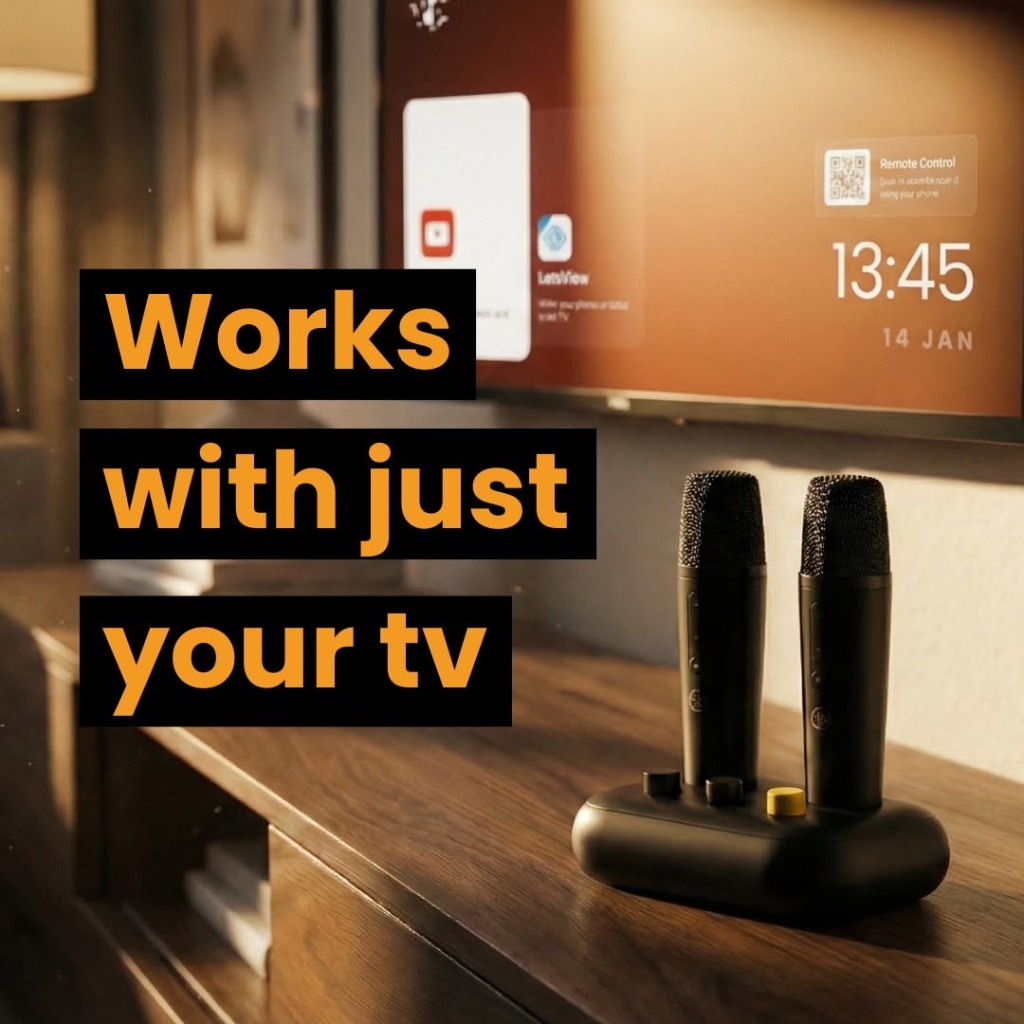
I architected PartySing as a turnkey hardware-plus-software bundle. A venue plugs a palm-sized box into any TV via HDMI, connects to WiFi, and immediately turns the room into a professional singing suite where patrons use their own phones as the remote control without installing any apps.
Real-Time Vocal Reduction and Zero-Lag Audio
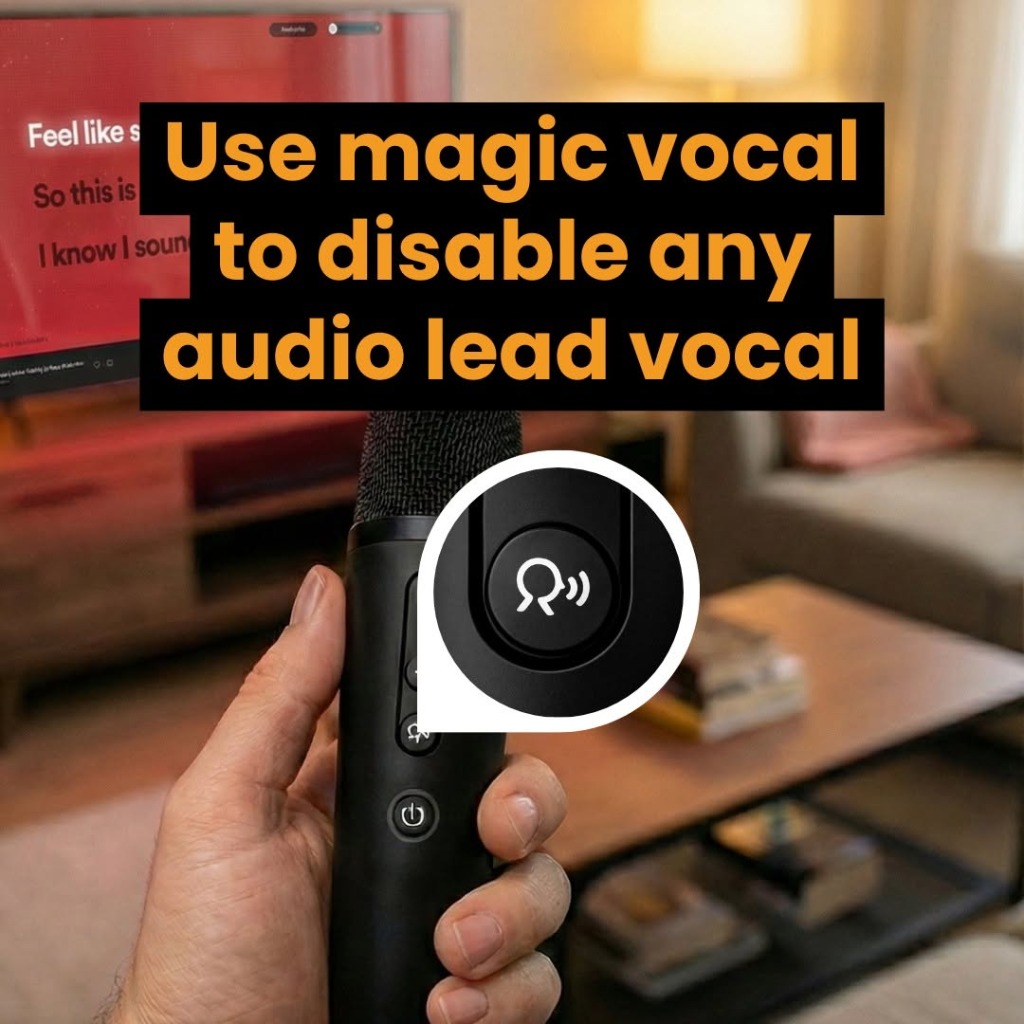
Singing over YouTube tracks presents a fundamental technical barrier: standard music tracks include the original singer's vocals. Furthermore, running software-based AI vocal isolation on low-cost Android TV chips causes devastating audio latency (often 200ms or more), making singing unbearable.
To solve this on a tight bill-of-materials, I engineered a dual-tier hardware architecture:
- PartySing Pro (Permanent Hub): Integrates a dedicated K3 / Puremic hardware DSP chip directly on the motherboard. The DSP runs hardware-level vocal attenuation in real time with near-zero latency, suppressing the original artist vocals while piping UHF wireless microphone audio through dedicated analog channels.
- Vendor System Mic Service: Replaced the stock vendor
MicDongleXsystem app with custom native receivers listening for hardware keycode 563. Tapping the physical mic remote key immediately pulls up a smooth ComposeMicDialogOverlayto adjust echo, mic gain, and vocal reduction depth. - PartySing Stick (Portable HDMI Dongle): A lightweight form factor designed for pop-up events and mobile setups, maintaining the same cloud pairing and launcher architecture.
A Privileged Android TV Launcher (uid=system)
Consumer Android apps cannot reliably take over the TV experience, handle silent over-the-air firmware updates, or prevent patrons from tampering with OS settings. I built PartySing Launcher as a privileged Android system app (uid=system) signed with the vendor platform keystore.
- Unbreakable Home Screen: The launcher binds to the Android
HOMEintent. When a guest presses the home button on any TV remote, PartySing remains securely in the foreground. - 10-Foot D-Pad Focus Engine: Built entirely in Jetpack Compose TV, every card and button features strict focus state boundaries (elevated scale, high-visibility orange rings, tactile sound cues) ensuring guests across a dim lounge can navigate effortlessly with a physical remote.
- Embedded Companion Apps: Built an isolated WebViews container APK bundled directly inside the launcher, allowing venues to launch Spotify, YouTube Music, and Apple Music without dropping out of the managed environment.
SingTube & The YouTube Lounge/MDX Protocol
Requiring patrons to download a bespoke mobile app creates an immediate barrier that kills social momentum in a venue. Instead, I tapped into a tool already installed on 99% of patron phones: the native YouTube mobile app.
I engineered SingTube by implementing the YouTube TV Lounge (MDX) pairing protocol:
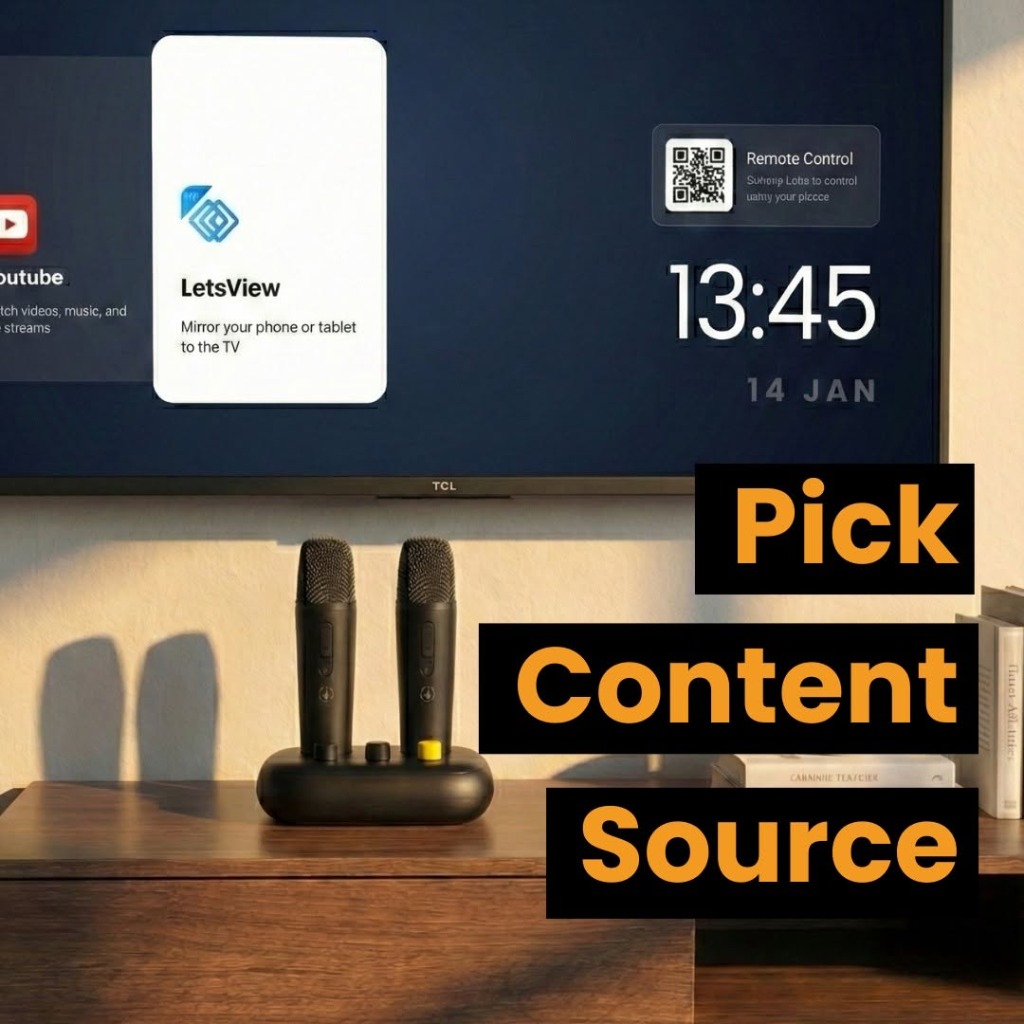
- 1-Tap Cast & 12-Digit Pairing: If the patron's phone is on the venue WiFi, PartySing TV broadcasts over mDNS and appears automatically in the phone's YouTube cast menu. If on 4G/5G, patrons simply type the 12-digit session code shown on screen.
- Collaborative Crowd Queue: Anyone in the room can add songs to the TV queue directly from their own phone. The launcher coordinates playback state, automatically skips pre-roll commercials, and displays track progress on the TV canvas.
- Automated Playlist Scraper: SingTube curates regional karaoke playlists from Supabase, displaying trending tracks in a native TV grid without requiring expensive third-party video API licenses.
Silent OTA Updates, Stripe Subscriptions & Zero Egress
Hardware deployed in venues across multiple cities cannot be serviced manually. The cloud infrastructure had to guarantee zero-touch reliability:
- Two-Stage OTA Distribution: Supabase Edge Functions manage device entitlement and version targeting based on hardware model strings (
partysing_provspartysing). Large firmware payloads and APKs are served from Cloudflare R2, keeping bandwidth costs at exactly \$0. - Stripe Automated Licensing: Commercial subscriptions are tracked via Stripe webhooks syncing directly to Supabase. If a venue's membership expires, the launcher gracefully switches into a limited basic mode without bricking the device or losing local settings.
- Anti-Bricking Failsafes: Firmware installations require MD5 checksum verification and recovery partition validation before invoking the Android recovery daemon.
Lessons from Building Hardware-First Ventures
- Hardware requires defensive software: In consumer apps, a crash results in a reload. On embedded TV hardware, a frozen broadcast receiver or corrupt firmware update bricks a physical box sitting in a customer's venue. Strict defensive error handling is mandatory.
- Meet users where their tools are: Rather than forcing venues and guests to learn a proprietary remote app, leveraging YouTube's native Lounge pairing eliminated 100% of onboarding friction.
- Full-stack ownership unlocks speed: Being able to modify the Kotlin broadcast receiver, the Supabase PostgreSQL schema, the Stripe subscription engine, and the 10-foot Compose UI in a single iteration loop enabled building a commercial-grade hardware ecosystem solo.